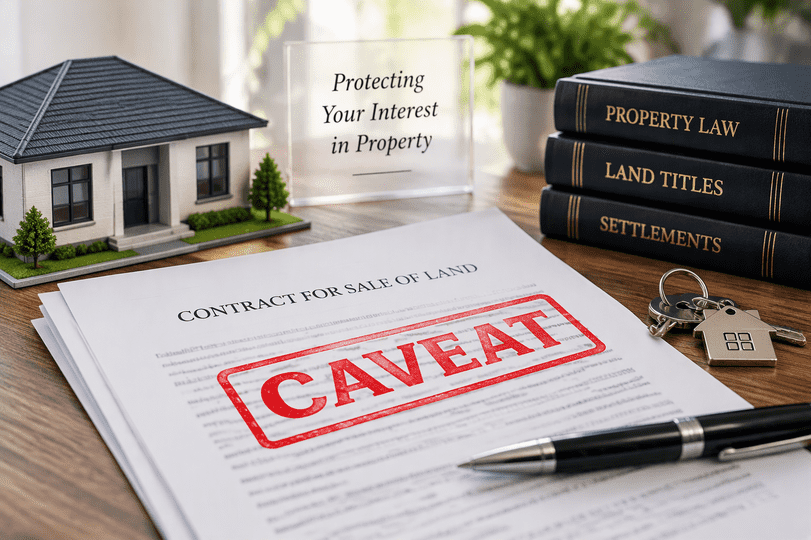
Caveats are a way in which you can officially register an interest on a property without owning it. For example, if you were to buy a house, and you take out a mortgage with a bank as part of that purchase, the bank is able to “register” their interest in your property by lodging a caveat.
What is or is not a “caveatable interest”?
Other examples of a “caveatable interest” are:
1. Someone purchasing land under a contract for sale of land, but the contract is not yet completed;
2. Someone who has a right to use another person’s land (i.e. by way of easement);
3. Someone who holds a charge or security interest over land;
4. A beneficiary (i.e. a unit holder) of a unit trust where that unit trust owns land; and
5. A person who has contributed to the purchase monies for the purchase of a property (this is considered an equitable interest).
There are a couple of instances where someone may not be able to lodge a caveat. These include:
1. If someone has an interest in the proceeds of the sale of the property, but not the property itself (unless they can force the sale of the property); or
2. An individual who is a beneficiary under a will to the residuary of an estate of which the property forms part of the estate. This is because the beneficiary is not entitled to a specific property, but rather a percentage or part of the whole residual property.
What is the effect of a caveat?
Once you lodge a caveat, and it is registered on the title of the property, you will be notified of any changes to the property, such as the property being sold. To return back to the mortgage example, this means that if there is still $150,000.00 owing on a mortgage when you wish to sell the house, the bank is able to be paid $150,000.00 from the sale of the property before you receive the rest of the amount.
Caveats can also be lodged by way of agreement under a deed or contract. For example, if someone owes your business money because you provided them with services they have not paid for, part of the payment plan may include a caveat. The other party may give you a “caveatable interest” that you can lodge on their property until the money they owe your business is paid. Once the full amount is paid, you will be required to remove the caveat as you no longer have a “caveatable interest.”
Can the owner challenge a caveat?
Yes, the owner of a property can challenge a caveat. If this occurs, the Court will consider a “reasonable cause” test, which asks the question did the caveator (i.e. the individual who lodged the caveat) have an honest belief, based on reasonable grounds” that they had a caveatable interest? This test is from the NSW Supreme Court decision of Beca Developments Pty Ltd v Idameneo (No 92) Pty Ltd (1990).
How do I register my “caveatable interest”?
If you believe you have a caveatable interest to be registered, and you require assistance with, or advice on, the best way to do this, please contact our friendly Streeterlaw team on contact@streeterlaw.com.au or 02 8197 0105 and we’d be happy to assist you.