
Once you receive judgment, stating thatyou are legally entitled to recover the debt you are owed, you are able to proceed with enforcing the recovery of that debt. Where you do not know what assets the debtor has, the first step is Examination.
Examination Notice
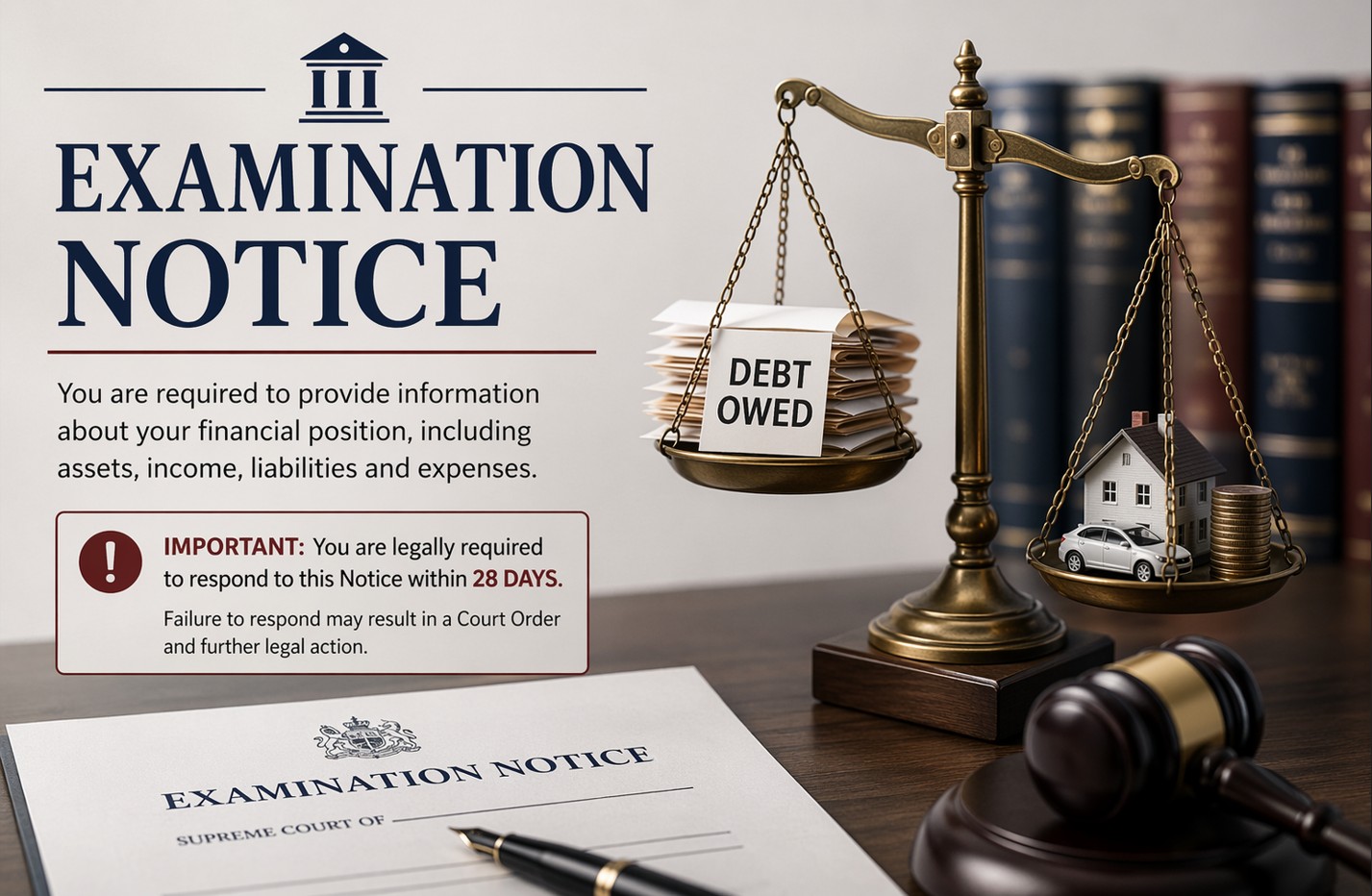
An Examination Notice is not a way to enforce a debt, but it is a way to determine what assets the debtor/s has that may be available for you to recover the debt. An Examination Notice allows you to obtain information about a debtor’s financial position, including assets and liabilities, income and expenditure.
An Examination Notice is served on a judgment debtor. It asks the debtor to provide answers to specific questions and to forward certain documents to the creditor. The Notice must be sent to the debtor’s address. The debtor has 28 days to respond with answers and supply the requested documents. Where the Notice is sent by post, it is usual practice to allow an additional 4 days for the debtor to respond.
In the Notice, you may wish to ask the debtor questions about:
– Current employment;
– Current income;
– Property owned in the debtor’s name, including real estate, shares, motor vehicles, art and jewelry;
– Details of funds held in bank accounts and credit union accounts;
– Current liabilities e.g. monthly mortgage payments;
– Number of dependents; and
– Weekly expenses such as petrol, food, fares, school fees, motor vehicle expenses, gas, electricity, water.
Documents you may wish to request as part of the Notice are:
– Recent bank statements evidencing bank balances for the last six months;
– Cheque books;
– Mortgage or charge documents;
– Wage slips or group certificates for the 12 months prior;
– Income tax returns for the past two years;
– All partnership agreements;
– Deeds or other documents such as evidence of the ownership of motor vehicles, real estate, shares, or any other property such as jewelry or art;
– Registration papers for motor vehicles or boats;
– Insurance policy over goods or land;
– Loan agreements and repayments books; and
– Lease agreements.
Examination Order
If the debtor fails to respond to the Examination Notice within 28 days, you can apply to the Court for the issue of an Examination Order. This requires the debtor to attend Court to answer your solicitor’s questions at an Examination Hearing.
Examination Hearing
The Examination Order is filed in the Local Court and attracts a filing fee, which is $109.00 for individuals, and $218.00 for corporations (as at the time of this article, the Court update filing fees regularly).
If the debtor attends Court for the examination hearing, they are examined as to their financial position. Usually, your solicitor and the debtor come to an agreement for the debt to be paid in instalments.
If the debtor does not attend Court for examination hearing, the Court usually relists the matter for two weeks’ time. If the debtor does not attend the Examination Hearing for a second time, the Court can grant permission to file a Notice of Motion for an arrest warrant. The purpose of the arrest warrant is for the Sherriff to attend the debtor’s residence and make them attend Court for examination